New opportunities open daily. Don't miss out!
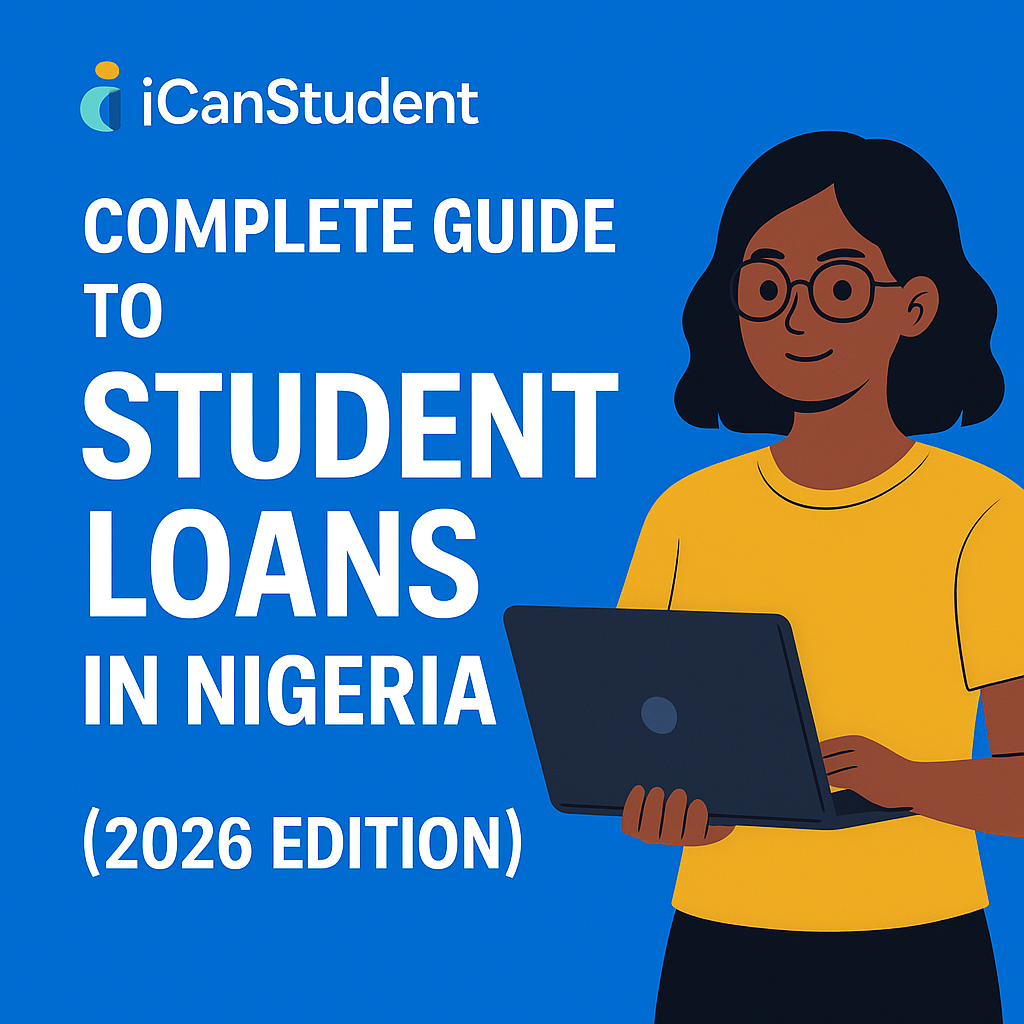
Get alertsComplete Guide to Student Loans in Nigeria (2026 Edition)
Always confirm details on the official website before applying.
Scholarship Details
Your detailed guide to NELFUND, bank loans, private lenders, requirements, repayment, and financial planning for Nigerian students.
With school fees increasing across Nigeria — from public universities to private institutions — many students struggle to keep up with tuition, accommodation, textbooks, feeding, transportation and unexpected academic expenses. Student loans have now become one of the most practical ways to stay in school without constant financial pressure.
This guide breaks down everything Nigerian students need to know about student loans: how they work, the types available, eligibility, documents, how to apply, repayment structure, and safe alternatives like grants and scholarships.
What Are Student Loans?
A student loan is financial support that helps students pay for education expenses such as tuition, acceptance fees, hostel, academic materials, transport, feeding, or project costs. Unlike scholarships, these funds must be repaid — but usually after graduation or once the student becomes employed.
Loans are often used alongside scholarships like the
👉 Jim Ovia Foundation Scholarship
and
👉 WMI Scholarship
especially when scholarships do not cover all expenses.
Why Student Loans Are Becoming Essential in Nigeria
Nigerian students rely on loans because:
- Tuition fees keep rising
- Parents/sponsors face financial instability
- Accommodation and transport are becoming expensive
- Some schools require early acceptance fee payment
- Students need laptops or academic gadgets
- International admissions require proof of funds
- Scholarship disbursements delay or do not cover everything
Loans fill the financial gap and allow students to focus on academics.
Types of Student Loans in Nigeria (2026)
1. Government Student Loans (NELFUND)
The Nigerian Education Loan Fund (NELFUND) is the federal government–backed loan created to support students in public tertiary institutions.
It offers:
- Tuition and upkeep support
- Zero or low-interest repayment
- Repayment begins after graduation/employment
- Designed for students from low-income backgrounds
For full details, read the
👉 NELFUND Student Loan Guide.
2. Bank Education Loans
Several Nigerian banks offer structured student loans for:
- University and polytechnic tuition
- Postgraduate studies
- International school fees
- Professional courses (ICAN, ACCA, Nursing, ICT)
Banks commonly offering education loans include:
- GTBank
- Access Bank
- UBA
- Zenith Bank
- Polaris Bank
- First Bank
You may need:
- Admission letter
- School fees invoice
- Guarantor form
- BVN + valid ID
- Bank statements
3. Fintech & Private Student Loans
These lenders offer faster approval and simpler requirements than banks.
They support:
- Tuition financing
- Laptop loans
- Professional skill loans
- Project/research funding
- Short-term upkeep loans
Pros:
✔ Quick approval
✔ No collateral
✔ Digital process
Cons:
⚠ Higher interest
⚠ Short repayment period
Good for emergency school needs.
4. Education Support Plans (Hybrid Loans)
Some financial institutions and insurance companies offer:
- Study savings + loan hybrid plans
- Education financing by parents/guardians
- Child education investment plans
- Foreign tuition financing packages
These are useful for long-term planning.
What Student Loans Can Cover
Most Nigerian student loans cover:
- Tuition fee
- School acceptance fee
- Hostel/accommodation
- Feeding and transport
- Textbooks & study materials
- Practical fees or clinical charges
- Visa fees (for study abroad)
- Travel tickets
- Academic gadgets (laptop/calculator/tablet)
- Research & project funding
For students looking for non-loan support, you can also check:
👉 Federal Government SVCG Grant (2026)
Eligibility Requirements for Student Loans
Eligibility varies but typically includes:
- Nigerian citizenship
- Admission into an accredited institution
- Student ID or admission letter
- Tuition invoice from school
- Valid government ID
- BVN & NIN
- Guarantor (for some lenders)
- Age 16–35
Postgraduate applicants may need NYSC certificate or proof of employment.
Documents Required
Depending on the lender:
- Admission letter
- School fee schedule
- Passport photograph
- Valid ID (NIN/Driver’s License/International Passport)
- Student ID
- BVN
- Guarantor form
- Bank statement (for some lenders)
- Proof of income (sponsor/guarantor)
- For international education: passport + visa
How to Apply for a Student Loan in Nigeria (Step-by-Step)
1. Confirm Eligibility
Check income level, school type, and requirements.
2. Choose Loan Type
Government? Bank? Fintech?
3. Prepare All Documents
Ensure everything is scanned clearly.
4. Submit Application (Online or Branch)
Most banks and fintech apps allow digital application.
5. Upload/Submit Supporting Documents
Ensure the school invoice is valid and verifiable.
6. Wait for Approval
This can take from hours to weeks depending on type.
7. Loan Disbursement
Money usually goes directly to the school, not the student.
8. Repayment Structure
Repayment terms differ by lender.
Loan Repayment in Nigeria
NELFUND Loans
- Repayment starts after graduation
- Only when employed
- A small percentage is deducted from salary
Bank Loans
- Fixed monthly repayment
- Interest applied
- Flexible repayment period
Fintech Loans
- Weekly/monthly repayment
- Higher interest
- Short tenure
Advantages of Student Loans
- Prevents dropping out
- Helps handle rising school fees
- Supports study abroad plans
- Helps fund professional certifications
- Can be combined with scholarships
- Allows you to spread payments over time
Students selected for opportunities like the
MCW Global Fellowship
or
Jim Ovia Scholarship
often still need loans for travel or accommodation.
Disadvantages
- You must repay
- Interest may increase total cost
- Late repayment affects credit profile
- Some lenders have strict requirements
How Students Can Avoid Loan Problems
- Borrow only what you truly need
- Choose long repayment plans if possible
- Avoid “quick loan apps” with predatory interest
- Read the terms before signing
- Pay early if you can
- Build financial discipline with a savings account
This pairs well with your savings pillar (Pillar Page 3).
Frequently Asked Questions
1. Can I apply for a loan without admission?
No, admission proof is required.
2. Is NELFUND a scholarship?
No, it is a loan with soft repayment.
3. Can I use a loan for visa and flight fees?
Yes — some banks and private lenders support this.
4. Do I need collateral or guarantor?
Banks may ask for guarantors; fintech lenders rarely do.
5. Can I repay before time?
Yes, early repayment reduces interest.
Conclusion
Student loans are becoming an essential part of educational financing in Nigeria. With proper planning, responsible borrowing, and clear understanding of loan terms, you can use loans to protect your academic future while combining them with scholarships and grants to reduce long-term financial stress.
This guide remains your reference point anytime you need clarity on student loans in 2026.
Fully funded abroad
Thinking about studying abroad? These fully funded programmes are worth a look. Check each one's eligibility before you apply.

Application Tracker
- Application OpenAccepting applications
- Under ReviewApplications being reviewed
- Assessment PhaseCandidates being assessed
- Winners AnnouncedResults published
Join the Icanstudent Community
Get scholarships, tips and updates wherever you are.
Explore More
More scholarships you might be interested in.
The All Nations Fellowship International (ANFI) Foundation is inviting applications for its 2027 Scholarship Programme for full-time undergraduate students who meet the…
Introduction Applications are open for the 9th Edition of the Femi Gbede Law School Scholarship, an initiative supporting Nigerian law graduates preparing…
Introduction Applications are open for the Moral Re-Armament Education Grant 2026/2027, an educational grant offered by Initiative of Change Nigeria to support…
Introduction Applications are invited for the Prada Uzodimma Law School Scholarship Grant (PUSG), an annual scholarship initiative established by Principle Legal Consult…
Want to see more?
There's more to discover. Find scholarships, internships and opportunities that match your interests.
Explore MoreAdd Icanstudent to your home screen
Open Icanstudent in one tap, like an app. Never miss a new scholarship.